01 — A tower with a torch
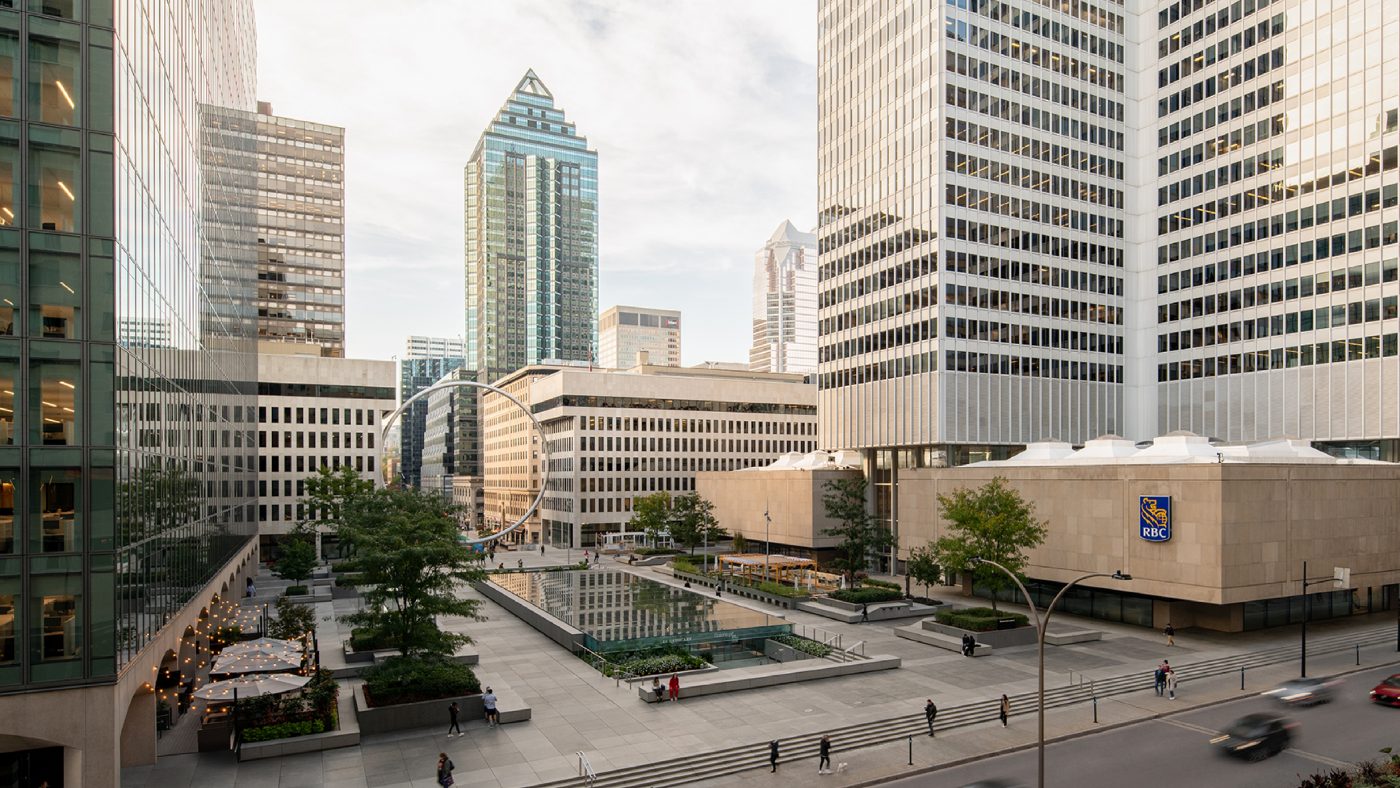
Henry Cobb was not yet thirty when I. M. Pei’s firm handed him the commission that would define this skyline. Place Ville Marie opened in 1962 on a scar — a rail cut north of Central Station, the CPR’s pit for the Mount Royal Tunnel — and answered it with 188 metres of cruciform steel, four narrow wings letting daylight all the way into an office floor plate. For a moment it was the tallest building in the Commonwealth. It no longer is, and doesn’t seem to mind.
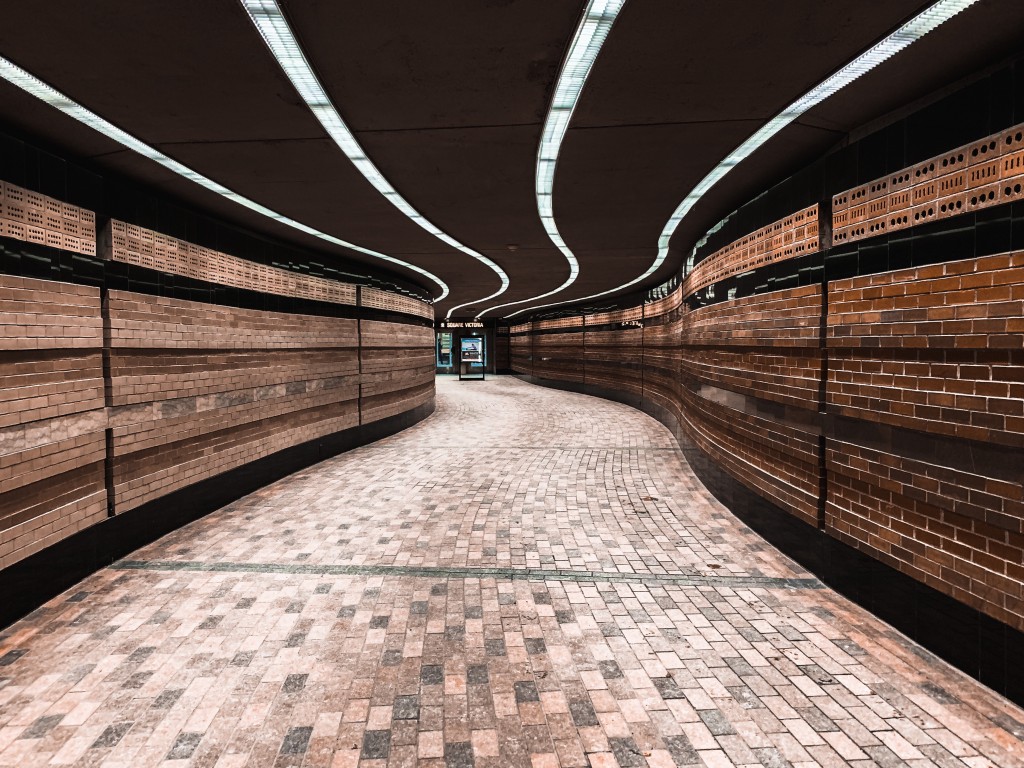
At night the tower still runs its beacon, a rotating light visible for kilomètres, a habit dating to the original design brief for a building meant to announce the city rather than merely occupy it. Underneath, the tower’s shopping concourse became the seed of what Montréal now calls RÉSO — 32 kilomètres of tunnel, the largest underground network of its kind anywhere, threading offices, hotels, and two Metro lines into a city that spends five months a year deciding whether to bother with a coat.
“At the time of its completion, the tower was the tallest building in Canada and the whole Commonwealth.”Les carnets
02 — Sainte-Catherine, on the surface
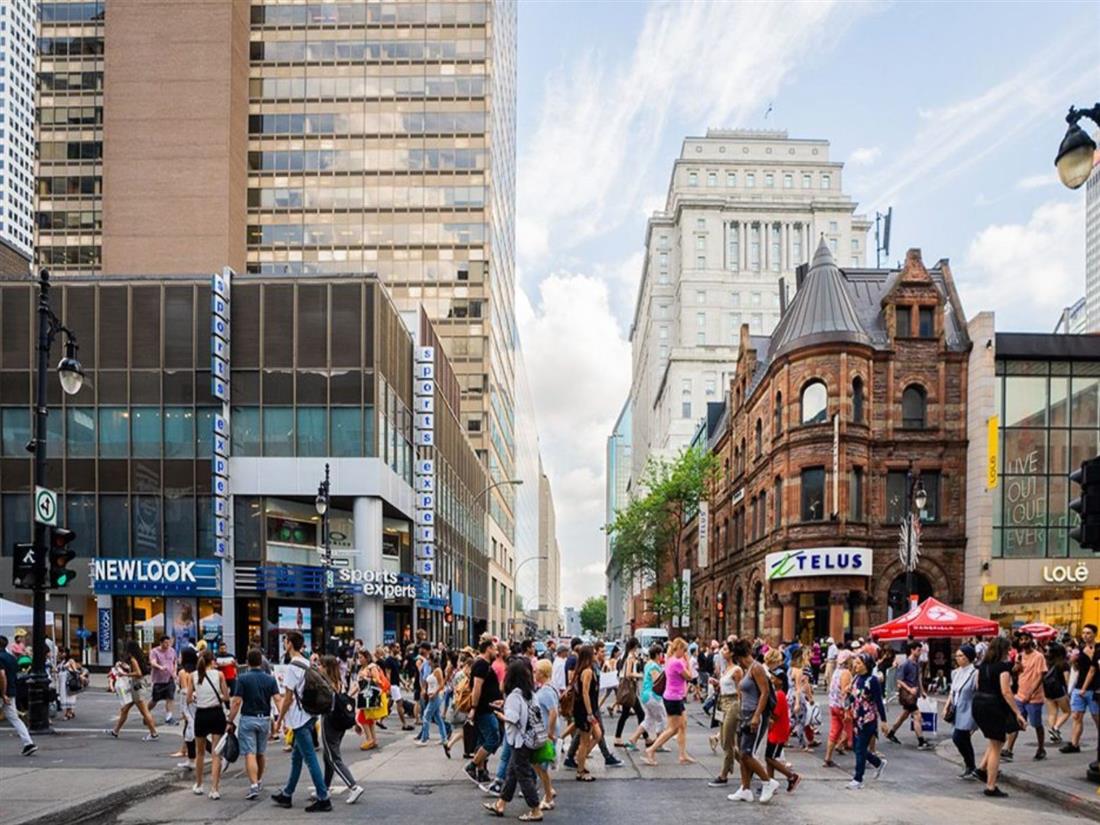
Above ground, Sainte-Catherine street still does the job it has done since the Sulpicians laid it out — retail spine, then and now, running east from Atwater with department-store bones (Maison Birks’ Beaux-Arts corner on Phillips Square has sold rings since 1879) alongside newer arrivals filling in the gaps left by decades of turnover. It is not a pretty street in the postcard sense. It is a working one, which downtown Montréal mostly still is.
McGill College avenue, four blocks over, does the one trick the rest of downtown can’t: a dead-straight sightline north to Mont Royal, engineered deliberately when the avenue was widened in the 1980s so the mountain would frame every walk to the metro. Office workers use it as a compass. Visitors use it as a photograph. Both are correct.
03 — A neighbourhood built to work in
Ville-Marie is Montréal’s smallest and densest borough by function — city hall, the financial district, McGill and Concordia’s downtown campuses, Old Montréal’s cobbles, the Village, all inside roughly fifteen square kilomètres. It has no residential majority to speak of during business hours; the borough’s daytime population dwarfs the number of people who actually sleep there, which is precisely why an office building can double, briefly, as the centre of gravity for a whole visiting team.
Square Dorchester sits four blocks from the tower, a 2.7-acre park with 50,000 bodies still under its lawn from its cemetery years before 1872, now mostly known for lunchtime sandwiches and the odd Grand Prix crowd. It is the nearest thing to a village green this office has, and after five days indoors, it earns the walk.